
How to Make a Matcha Latte at Home (No Fancy Gear Required)
A café matcha latte costs seven dollars. This one costs about ninety seconds. Hot or iced, whisk or no whisk, and a ratio that never tastes bitter.
Jump to recipe ↓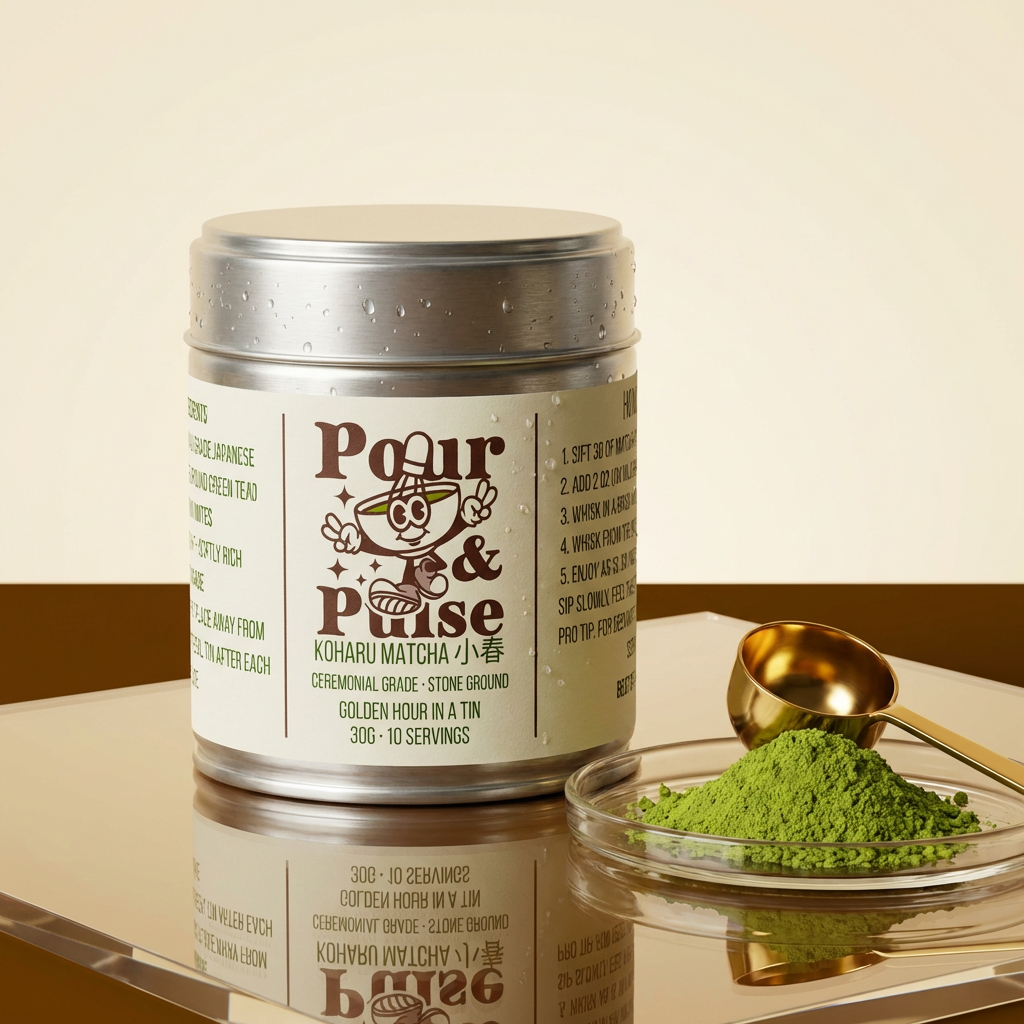
The 30 second version
Sift 1 tsp of ceremonial grade matcha into a cup. Add 2 oz of hot water at 175F, never boiling. Whisk 20 to 30 seconds until it foams. Top with 6 to 8 oz of milk, or pour it over ice. That is the whole thing.
Most people try to make a matcha latte at home once, end up with something bitter and lumpy, and quietly go back to paying seven dollars for one. That is not your fault, and it is not matcha's fault either. It is almost always one of three things: water that was too hot, matcha that was too old, or skipping the step everybody skips.
Fix those and a homemade matcha latte beats most cafes, because you control the ratio and nobody is rushing. You do not need a bamboo whisk, a scale, or a thermometer. Here is exactly how to do it, hot or iced, with whatever you already have in your kitchen.
The matcha latte ratio that never fails
Almost every bad homemade matcha comes down to ratio. Too little water and it will not dissolve. Too much and it turns thin and grassy. This is the one to memorize.
No thermometer? Boil your kettle, then let it sit for five minutes. That lands you right around 175F. In a hurry, pour two parts boiling water and one part cold water. Boiling water scorches matcha, and scorched matcha is bitter matcha. This single step fixes most complaints.
How to make a hot matcha latte
The classic. Five minutes start to finish, and the only real skill is not rushing the whisk.
What you need
-
1 tsp ceremonial grade matcha
About 3g. Ceremonial, not culinary. This is the whole ballgame. -
2 oz hot water
60 ml at 175F, 80C. Never boiling. -
6 to 8 oz milk of choice
Oat and whole dairy are the safest bets. -
Optional honey, maple, or vanilla syrup
Half a tsp is plenty. Add it early, see below.
Method
-
Sift the matcha
Push 1 tsp of matcha through a small sieve into your cup. This is the step everyone skips and the reason lattes come out lumpy. Matcha clumps as it sits, and no amount of whisking undoes a clump. Ten seconds here saves the whole drink.
-
Add hot water, not boiling
Pour in 2 oz of water at about 175F. If you do not have a thermometer, boil the kettle and let it rest five minutes. Boiling water burns the leaf and turns a sweet matcha bitter in one second flat.
-
Whisk until it foams
Whisk briskly in a W or M motion for 20 to 30 seconds, keeping the whisk near the surface. You are looking for a fine, even foam on top and no grit at the bottom. Do not stir in circles, that just moves it around.
-
Add your milk
Top with 6 to 8 oz of steamed or warm milk. For extra foam, froth the milk first and spoon it on. Sip immediately, matcha settles fast and is at its best in the first few minutes.
No whisk? Three ways that actually work
A bamboo whisk, a chasen, makes the best foam. But you do not need one to make a great matcha latte at home. These all work, ranked by how close they get you.
The jar shake
Best free option. Put the sifted matcha and hot water in a jar with a tight lid, seal it, and shake hard for 20 to 30 seconds. You get a genuinely good foam and zero clumps. Let it cool a second first so the lid does not pop.
A handheld frother
Best cheap upgrade. The ten dollar battery kind you already use for coffee works beautifully on matcha. Ten seconds and it is smoother than most people manage with a bamboo whisk.
A blender
Overkill for one cup, perfect for four. Blend matcha, hot water, and milk together for 15 seconds. Great for iced matcha lattes and for making a batch when people are over.
A fork, honestly
It works if you sift properly first. It will not foam much, but it will dissolve. Use a narrow cup so the tines stay submerged, and whisk fast for a full 30 seconds.
How to make an iced matcha latte
Here is the mistake almost everyone makes with an iced matcha latte: they whisk the matcha straight into cold milk. Matcha does not dissolve properly in cold liquid, which is why you end up chewing green specks at the bottom of the glass.
Do this instead. Whisk your matcha with the 2 oz of hot water first, exactly like the hot version. Then fill a tall glass with ice, pour in 6 to 8 oz of cold milk, and pour the green shot over the top. You get that layered cafe look for free, and it stirs in smooth every time.
The best milk for a matcha latte
Milk matters more than people think, because matcha is delicate and the wrong milk bulldozes it. Here is the honest ranking.
Why your matcha tastes bitter, and how to fix it
Good matcha is naturally sweet with a clean grassy finish. If yours is bitter, something is wrong, and it is almost always one of these five things.
Your water was boiling
The single biggest cause. Water above about 180F scorches matcha and pulls out harsh tannins.Fix: Let the kettle sit five minutes after it boils.
You are using culinary grade
Culinary matcha is built to survive being baked into cake. Drunk on its own it is astringent by design.Fix: Use ceremonial grade for anything you drink.
Your matcha is old
Matcha is a fresh food. Weeks after opening it fades from vivid green to dull, and sweet turns bitter.Fix: Buy smaller amounts more often and keep it sealed and cold.
You skipped the sift
Clumps do not just feel bad, they hide dry pockets of powder that hit your tongue undiluted.Fix: Ten seconds with a small sieve. Every time.
You stirred instead of whisking
Circular stirring never aerates it. You get sediment at the bottom and a flat, chalky drink.Fix: Whisk in a W or M shape near the surface.
Too much matcha
More matcha does not mean more flavor, it means more bitterness and a gritty texture.Fix: Stick to 1 tsp per drink and let the quality do the work.
Sweetening it, the right way
If you want it sweet, add the sweetener at the paste stage, while the matcha and hot water are together, not after the milk goes in. Cold milk will not dissolve honey or sugar and you will get a sweet slick at the bottom. Half a teaspoon of honey, maple syrup, or vanilla syrup is plenty. Start there and go up. Most cafe matcha lattes are far sweeter than they need to be, which is usually them covering for a bitter base you no longer have.
Level up: use ceremonial grade
Technique gets you most of the way. The rest is the matcha itself. Koharu is first flush ceremonial grade, stone ground in Uji, Kyoto, and it is the exact matcha we pour at every Pour & Pulse event.
Shop Koharu MatchaMatcha latte questions, answered
One teaspoon, about 3g, per drink. That is the standard for a single serving and it is what a 30g tin is measured against, roughly 10 lattes per tin.
Yes. The easiest method is the jar shake: seal sifted matcha and hot water in a jar and shake for 20 to 30 seconds. A handheld milk frother works just as well and costs about ten dollars.
Usually water that was too hot, matcha that is culinary grade rather than ceremonial, or matcha that has gone stale. Use water at about 175F and fresh ceremonial grade, and the bitterness disappears.
Oat milk is the best all round choice because it is creamy and sweet without overpowering the matcha. Whole dairy is the classic. Almond is the weakest option since its own bitterness stacks on the matcha.
For a latte you can get away with a good culinary grade, but you will taste the difference immediately. Ceremonial grade is smoother and naturally sweeter, so you need less sweetener to enjoy it.
Whisk the matcha with 2 oz of hot water first, then pour that over ice and cold milk. Matcha does not dissolve in cold liquid, which is why whisking straight into cold milk leaves specks.
A single teaspoon of matcha has meaningfully less caffeine than a cup of coffee, and it is released more slowly, which is why matcha tends to feel steady rather than spiky.
Matcha is best in the first few minutes, since it settles and loses its foam. If you want to prep, whisk the matcha shot fresh and keep the milk ready to go. A blended batch holds up for an hour in the fridge with a shake before serving.